 Product
- Caustic Soda Liquid / Lye :

Sodium hydroxide (NaOH), also known as lye and caustic soda, is a caustic metallic base. It is used in many industries, mostly as a strong chemical base in the manufacture of Alumina, pulp and paper, textiles, water treatment, soaps and detergents, Inorganic chemicals production and as a cleaner. Worldwide production stands at about 70 million tonnes. Sodium hydroxide is a common base in chemical laboratories.Commercially traded worldwide as a 50 % solution in 3 main grades viz Membrane / Mercury / Diaphragm.
- Caustic Soda Flakes:
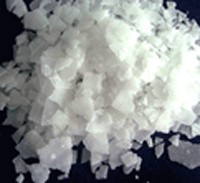
When the 50 % Liquid is concentrated to 99 % through evaporation the derived product is Flakes. This form of Caustic soda is preferred by smaller customers and for ease and economy of transportation over large distances. Packed in 25 / 50 kg bags or 1 MT Jumbo bags and available palletised and unpalletised as per customers requirement.
- Caustic Soda Pearls:
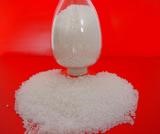
Another form of Liquid Caustic soda concentrated to 99 % is presented in form of tiny pearls. Pearls are easier to handle , dissolve faster and are workplace friendly. Packing formats are in 25 / 50 kg bags or 1 MT Jumbo bags and available palletised and unpalletised as per customers requirement.
-
Ethylene Di Chloride (EDC):
Ethylene chloride (C2H4Cl2), also called Ethylene dichloride or 1,2-dichloroethane, a colourless, toxic, volatile liquid having an odour resembling that of chloroform. It is denser than water, and it is practically insoluble in water. Ethylene chloride is produced by the reaction of ethylene and chlorine. The annual production of ethylene chloride exceeds that of all other organohalogen compounds and ranks behind only that of ethylene and propylene among all organic compounds. Almost all ethylene chloride is converted to vinyl chloride for the production of polyvinyl chloride, or PVC. The conversion of ethylene chloride to vinyl chloride is carried out at temperatures of about 500 °C (930 °F) in the presence of a catalyst.
- Vinyl Chloride Monomer(VCM):
Vinyl chloride is the organochloride with the formula H2C:CHCl. It is also called vinyl chloride monomer, or VCM.This colorless compound is an important industrial chemical chiefly used to produce the polymer polyvinyl chloride (PVC). At ambient pressure and temperature, vinyl chloride is a gas with a sickly sweet odor. It is highly toxic, flammable and carcinogenic.
- Poly Vinyl Chloride (PVC) :
Polyvinyl chloride (PVC), a synthetic resin made from the polymerization of vinyl chloride. Second only to polyethylene among the plastics in production and consumption, PVC is used in an enormous range of domestic and industrial products, from raincoats and shower curtains to window frames and indoor plumbing. A lightweight, rigid plastic in its pure form, it is also manufactured in a flexible “plasticized” form.
- Methylene Di Chloride ( MDC):
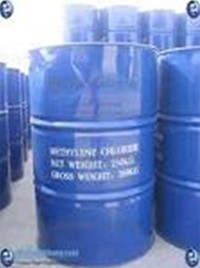
Dichloromethane (DCM or methylene chloride) is an organic compound with the formula CH2Cl2. This colorless, volatile liquid with a moderately sweet aroma is widely used as a solvent. Although it is not miscible with water, it is miscible with many organic solvents.It was first prepared in 1840 by the French chemist Henri Victor Regnault, who isolated it from a mixture of chloromethane and chlorine that had been exposed to sunlight.
- Epichlorohydrin ( ECH ):
Epichlorohydrin is an organochlorine compound and an epoxide. This is a colorless liquid with a pungent, garlic-like odor, moderately soluble in water, but miscible with most polar organic solvents.Epichlorohydrin is a highly reactive compound and is used in the production of glycerol, plastics, epoxy glues and resins, and elastomers. In contact with water, epichlorohydrin hydrolyzes to 3-MCPD, a carcinogen found in food.
- Propylene Oxide (PO):
Propylene oxide is anorganic compound with the molecular formula CH3CHCH2O. This colourless volatile liquid is produced on a large scale industrially, its major application being its use for the production of polyether polyols for use in making polyurethane plastics. It is chiral epoxide, although it commonly used as a racemic mixture. This compound is sometimes called 1,2-propylene oxide to distinguish it from its isomer 1,3-propylene oxide, better known as oxetane.
- Chlorinated Paraffin Wax ( CPW ):
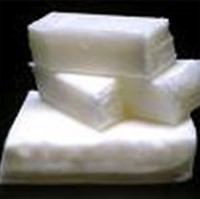
Chlorinated paraffins are manufactured by the chlorination of n-paraffin or paraffin wax, normally in a batch process. The reaction is exothermic and leads to the generation of the by-product hydrochloric acid. After removing residual traces of acid, a stabiliser is added to produce finished batches.
Chlorinated paraffins, which contain 30-70% chlorine, are largely inert and almost insoluble in water. Paraffins have extremely low vapour pressure. Most commercial chlorinated paraffin products are liquid and range from relatively low to extremely high viscosity. There are also solid types which have longer carbon chain lengths and usually contain 70-72% chlorine.
Increasing the chlorine content results in products with higher viscosity and density. Chlorinated paraffins are capable of mixing with many organic solvents such as aliphatic and aromatic hydrocarbons, chlorinated solvents, ketones and esters.